
 REQUEST AN APPOINTMENT
Inability to close eyelids
Thursday, 02 March 2023
Lagophthalmos is a condition that prevents the eyes from closing completely. If the problem only occurs when sleeping, it is called nocturnal lagophthalmos.
Thursday, 02 March 2023
Lagophthalmos is a condition that prevents the eyes from closing completely. If the problem only occurs when sleeping, it is called nocturnal lagophthalmos.

Thursday, 23 February 2023
Healthy eyes and vision are extremely important for optimal sports performance. There are several important visual skills that can affect the practice of a sport. If you want to perform at your best, it is essential that you make sure you see your best.

Thursday, 16 February 2023
Rheumatoid arthritis is a type of autoimmune arthritis that affects the joints and other body tissues. In this disease, the immune system mistakenly attacks the body's cells and tissues, causing inflammation in the joints. This chronic inflammation can damage joint tissue and cause pain, swelling, stiffness and loss of mobility in the affected joints.

Thursday, 09 February 2023
Children are too young and inexperienced to realize that something is wrong with their vision. Often, eye problems go undetected until they are older, especially if they don't have eye exams other than those they get at school or from their pediatrician. But, as parents, we can notice things that could be signs that your child has vision problems. And the sooner these problems are treated, the better.

Thursday, 02 February 2023
Patients with ocular pathologies often describe a sensation of sand or foreign body in the eye, even though there is nothing there. This symptom, increasingly common in ophthalmology, is aggravated by visual fatigue due to remote work and prolonged use of screens.

Thursday, 26 January 2023
Retinoblastoma is a type of pediatric cancer that develops in the retina of the eye. The retina is located at the back of the eye. It has layers of cells that sense light and send information to the brain.

Thursday, 19 January 2023
Stargardt's disease is a rare genetic eye disease that occurs when fatty material builds up in the macula, the small part of the retina needed for sharp, detailed vision.
Friday, 13 January 2023
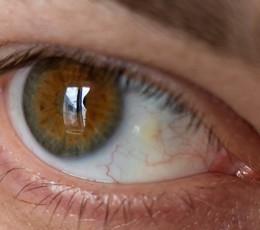
A pinguecula is a benign, or non-cancerous, growth that develops in the eye. It occurs in the conjunctiva, the thin layer of tissue that lines the white part of the eye. It can appear at any age, but occurs mostly in middle-aged and older people. These growths rarely need to be removed and, in most cases, no treatment is necessary.

Thursday, 05 January 2023
Trachoma is a bacterial infection that affects the eyes. It is caused by the bacterium Chlamydia trachomatis. Trachoma is contagious and is spread through contact with the eyes, eyelids, and nasal or pharyngeal secretions of infected persons. It can also be transmitted by handling infected objects, such as handkerchiefs.

Thursday, 29 December 2022
Presbyopia is the normal loss of the ability to focus on objects up close, which occurs with age. Most people begin to notice the effects of presbyopia in their 40s, when they begin to have trouble seeing small print, including phone text messages, clearly.

Thursday, 22 December 2022
Eye burning is usually a stinging and irritating sensation in the eyes. It can also cause itching or tearing, as well as eye discharge. It is uncomfortable and can be a health problem.
Symptoms that accompany eye burning may include:

Friday, 16 December 2022
Floaters appear as small spots that move across the visual field. They may stand out when you look at something bright, such as white paper or the sky. They may bother you, but they should not interfere with your vision.


